What Is Cloud Communications Standards Governance
The cloud communications market is expanding rapidly, and the protocols ...

Speech analytics automatically transcribes and analyzes 100% of customer calls using ASR, NLP, and machine learning, replacing the small manual sample so every conversation becomes structured, measurable intelligence.
Its core capabilities, including transcription, sentiment analysis, automated QA scoring, and root-cause analysis, power use cases like agent coaching, churn prediction, and compliance monitoring.
Real-time analysis adds live agent prompts and sentiment alerts during calls, with a measurable payoff of roughly 20-30% lower costs and a 10% lift in customer satisfaction.
The main tool decision is dedicated platforms for analytical depth versus embedded CCaaS analytics for simpler setup and tighter integration.
Every contact center conversation contains information about what your customers need, how your agents are performing, and where your business is falling short. For decades, most of that intelligence was lost the moment the call ended.
Speech analytics changes that. Contact center speech analytics automatically analyzes language, tone, and patterns across customer interactions, so you can turn your most abundant (and underutilized) data source into a continuous engine for improvement.
The technology is becoming increasingly popular, as well – experts predict that the global speech analytics market will pass $7.4 billion by 2030.1 If you’re not already leveraging speech analytics in your contact center, you may already be falling behind the competition.
Read on to learn what business leaders need to know about speech analytics for call centers, along with tips for finding a solution that meets your needs and budget.
Speech analytics is the technology that automatically transcribes, processes, and analyzes spoken language from customer calls. Using automatic speech recognition (ASR), natural language processing (NLP), and machine learning, speech analytics software converts audio into structured data that can be searched, categorized, and measured at scale – without any manual effort.
As a result, every call – not just the ones a supervisor happens to monitor – becomes a source of intelligence. Topics, keywords, emotional tone, compliance language, and agent behavior patterns are tracked systematically across every interaction. What was once a qualitative impression becomes a quantifiable, comparable dataset.
Speech analytics combines several technologies that work together to turn raw call audio into usable intelligence. Four capabilities do most of the heavy lifting.
Automatic speech recognition (ASR) and natural language processing (NLP) convert hours of spoken interactions into searchable, structured text. This is the foundation of the entire system, since every downstream analysis depends on an accurate transcript. Transcription quality also sets the ceiling on how reliably the software can detect topics, keywords, and compliance language across your call volume.
Sentiment analysis evaluates tone, pacing, vocabulary, and contextual cues to detect how a customer feels during a conversation. It flags emotions such as frustration, confusion, or satisfaction as they surface, turning a literal transcript into a read on the customer's actual experience. That emotional signal is often what explains why two calls with similar outcomes felt completely different to the people on the line.
Rather than reviewing a handful of calls by hand, the system scores agent adherence to scripts, greeting compliance, and polite language across thousands of calls in minutes. Every interaction gets measured against the same criteria, so quality standards apply uniformly and no agent is judged on an unrepresentative sample. That removes both reviewer fatigue and the bias that creeps in when supervisors can only listen to a fraction of calls.
Root-cause analysis clusters topics and outcomes across every interaction to pinpoint the specific reasons behind repeat calls, long hold times, and escalations. Instead of treating each complaint as an isolated event, it surfaces the patterns that connect them, so you can fix the source instead of the symptom. The payoff is fewer recurring issues and a clearer view of which problems are worth prioritizing first.
Traditional quality assurance programs review a small sample of calls and draw conclusions from that narrow slice. Call center speech analytics eliminates the sample entirely. These tools analyze every interaction, giving operations leaders a complete and unbiased picture of what’s actually happening across the team.
In a standard deployment, call center speech analytics enables teams to:
When every conversation is analyzed at scale, the blind spots that once lived in the space between sampled calls disappear entirely.
Beyond the technology itself, three use cases account for most of the value contact centers get from speech analytics.
Agent Coaching: Replacing the unrepresentative 1–2% of calls a supervisor can manually sample with 100% coverage lets managers coach from complete, data-backed evidence rather than anecdotes. (The real-time coaching section below covers how this plays out live, during the call.)
Churn Prediction: The system automatically flags callers who use trigger words and phrases signaling dissatisfaction or an intent to cancel, routing those conversations to retention teams before the customer is gone.
Compliance Monitoring: Speech analytics flags potential regulatory violations, missed mandatory disclosures, and mentions of vulnerable customers in real time, reducing the risk of a costly compliance gap going unnoticed.
Acoustic features like speech rate, pitch variation, energy level, and pause duration carry a lot of emotional information that text sentiment models alone can’t fully convey.
Voice analytics for call centers uses these acoustic signals to catch issues like customer frustration and agent stress, as well as signs that indicate difficult interactions, such as overtalk or prolonged silence. It then validates that the emotional arc of the call is consistent with the outcome recorded in the CRM.
The combination of linguistic and acoustic analysis gives contact center leaders the most complete view possible of what is happening in customer conversations – and why outcomes differ across agents and teams.
While the technology originated in voice-only environments, modern contact center speech analytics has expanded to reflect how customers actually communicate today. Leading platforms analyze phone interactions alongside chat, email, and other digital channels – giving operations leaders a cross-channel view of customer sentiment and behavior that a voice-only approach can never provide.
For example, a customer's frustration may first appear in a transcript with a live chatbot before surfacing as a call escalation. Contact center speech analytics makes that trajectory visible across all touchpoints, so agents can take action before it becomes a loss.
Ready to explore speech analytics solutions? The CCA's Cloud Communications Providers Directory connects you with fully vetted vendors, so you can find the right speech analytics software for your contact center.
The business case for deploying speech analytics in a call center spans operational efficiency, customer experience quality, and strategic intelligence – all from data your organization already generates.
Speech analytics lets supervisors analyze every call automatically, dramatically improving quality oversight without increasing headcount or reviewer bandwidth.
These systems identify performance issues systematically, enabling your management teams to address them in days rather than weeks and accelerating agent skill development.
Trending complaint data surfaces product and process root causes before they become widespread problems requiring reactive responses.
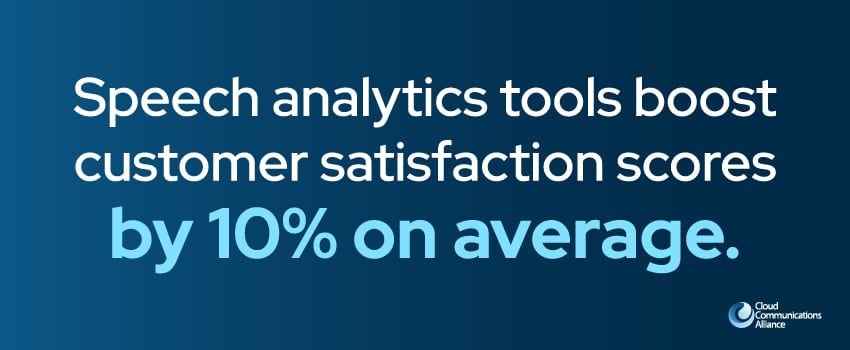
Businesses that use speech analytics see a 10% improvement in customer satisfaction scores on average.2 These platforms apply uniform criteria to every call, so your customers get a consistent experience regardless of who they speak with.
Call data can reveal information on competitors, pricing perceptions, and product gaps that never show up in surveys or feedback forms.
Post-call analysis is helpful, but real-time speech analytics raises the stakes by providing insights while the conversation is still active. Rather than reviewing what went wrong after the fact, agents and supervisors get live guidance during the call – so they can recover from difficult interactions before they end badly.
Real-time speech analytics capabilities typically include:
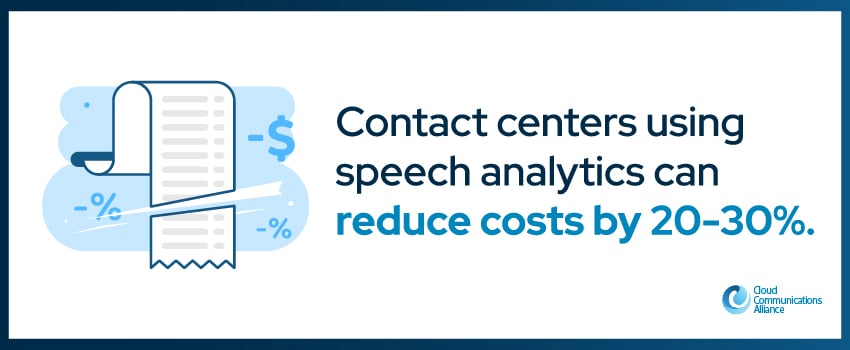
Problems caught during a call are typically cheaper to resolve than problems caught after the fact, which is likely why speech analytics can help reduce contact center costs by 20-30%.2
Contact centers have two main options for speech analytics software: dedicated platforms or embedded solutions. Here’s how these compare:
Dedicated call center speech analytics software delivers deep capabilities, including advanced AI models trained specifically on your own contact center data, configurable topic and phrase libraries, and a robust reporting environment.
This approach typically delivers the highest return on investment for mature operations with complex QA programs, large agent populations, or stringent regulatory requirements.
A growing number of CCaaS platforms now include call center voice analytics software as a native capability. Embedded analytics offers the advantage of unified administration, tighter CRM integration, and a single vendor relationship – making it a strong starting point for organizations building a conversation intelligence practice for the first time.
However, embedded solutions rarely match the analytical depth of dedicated platforms for advanced use cases like acoustic analysis, real-time agent coaching, or complex compliance monitoring workflows.
The CCA’s Contact Center Vendors Directory can help you find fully vetted providers offering speech analytics solutions that align with your contact center needs and business objectives. But whether you’re evaluating a dedicated or embedded solution, the most important factors for choosing speech analytics call center software include:
Transcription errors corrupt topic detection and keyword identification, so it’s important to look for solutions that can understand accents and industry-specific vocabulary across your entire customer base.
Determine whether you need post-call analysis alone or real-time agent coaching during calls. Real-time capabilities require more sophisticated infrastructure and integration with your agent desktop, but the coaching impact justifies the complexity for most large operations.
Bidirectional integration with your CRM and workforce management tools ensures that your speech analytics data flows into existing workflows. A solution that requires manual data export and import will create barriers to adoption.
Customizable scoring rubrics provide more value than fixed templates, as scoring should reflect your contact center’s actual quality assurance standards – not generic industry benchmarks.
Pricing structures should scale predictably as call volumes grow, not charge per-minute fees that become prohibitive at scale. Understand your total cost of ownership at your expected scale.
Consider how well the software integrates with your broader technology stack. Agents will be able to adopt a speech analytics solution that works with your existing CRM, workforce management platform, and communication tools more readily than an isolated platform.
Speech analytics is technology that automatically transcribes, processes, and analyzes spoken language from customer calls. Using automatic speech recognition (ASR), natural language processing (NLP), and machine learning, it converts call audio into structured data that can be searched, categorized, and measured at scale. That means every call becomes a source of intelligence, not just the small sample a supervisor happens to review. Topics, keywords, emotional tone, compliance language, and agent behavior get tracked systematically across every interaction, turning qualitative impressions into a quantifiable dataset.
Four core capabilities do most of the work. Speech-to-text transcription uses ASR and NLP to turn spoken calls into searchable text. Sentiment analysis reads tone, pacing, and word choice to detect emotions like frustration or satisfaction. Automated QA and scoring rate agent adherence to scripts, greetings, and compliance language across thousands of calls in minutes. Root-cause analysis clusters topics and outcomes to pinpoint why customers repeat-call, wait on hold, or escalate. Together they convert raw audio into structured, measurable intelligence.
Sentiment analysis is the capability that detects how a customer feels during an interaction. It evaluates tone, pacing, vocabulary, and contextual cues to flag emotions such as frustration, confusion, or satisfaction. Voice-based sentiment analysis goes further, using acoustic signals like pitch variation and pause duration that text alone can miss. The result lets supervisors see not just what was said but the emotional arc of the call, and whether that arc matches the outcome recorded in the CRM.
Speech analytics replaces the unrepresentative 1–2% of calls a supervisor can manually sample with 100% coverage, so coaching draws on complete evidence instead of anecdotes. Managers can spot performance patterns systematically and address them in days rather than weeks. Real-time tools add live agent prompts and sentiment alerts during the call, letting supervisors guide agents before an interaction goes badly. The payoff is faster skill development and more consistent quality across the whole team.
Speech analytics flags callers who use trigger words and phrases that signal dissatisfaction or an intent to cancel. When those signals appear, the system can route the conversation to a retention team for proactive outreach before the customer leaves. Because every call is analyzed rather than a small sample, early churn signals that once slipped through unsampled calls become visible. That gives teams a chance to intervene while the relationship can still be saved.
Speech analytics monitors 100% of calls for regulatory compliance, flagging potential violations, missed mandatory disclosures, and mentions of vulnerable customers. Real-time detection alerts agents to required disclosures or prohibited language before the call ends, so issues get corrected in the moment. After the call, the same analysis creates an auditable record across every interaction rather than a sampled few. That full coverage reduces the risk of a costly compliance gap going unnoticed.
Real-time speech analytics delivers insights while the conversation is still active, instead of only after the call ends. It powers live agent prompts that surface relevant knowledge base articles or script guidance, sentiment alerts when a customer's tone shifts negatively, and real-time compliance detection. It can also automate after-call work like summaries and CRM updates. Because problems caught during a call are usually cheaper to resolve than problems caught later, real-time analysis is a major driver of cost savings.
Dedicated platforms deliver the deepest capabilities, including AI models trained on your own contact center data, configurable phrase libraries, and robust reporting. They typically suit mature operations with complex QA programs, large agent teams, or strict regulatory needs. Embedded analytics, built natively into a CCaaS platform, offers unified administration, tighter CRM integration, and a single vendor relationship, making it a strong starting point for first-timers. The tradeoff is that embedded tools rarely match dedicated platforms for advanced acoustic analysis or real-time coaching.
Yes. Industry estimates suggest speech analytics can reduce contact center costs by 20–30%, largely because problems caught during a call are cheaper to resolve than problems caught after the fact. It also cuts QA overhead by analyzing every call automatically instead of paying reviewers to sample a few. On the customer experience side, businesses using speech analytics report around a 10% improvement in customer satisfaction scores on average, which supports retention and reduces costly churn.
Speech analytics for call centers has evolved from a niche QA tool into a pillar of high-performing contact center operations. The organizations winning on customer experience today treat every conversation as structured data – and act on it systematically, in real time, and at scale.
Conversation intelligence is no longer reserved for large enterprises with dedicated analytics teams. Visit the CCA's Cloud Communications Providers Directory to explore leading speech analytics providers and contact center technology partners who can help you unlock the intelligence hidden in your customer conversations.
If your organization is shaping the future of contact center technology or cloud communications, we’d love to have you in the room. Apply for CCA membership today and join the global community driving the industry forward.
Sources:
Browse these posts below for the latest in cloud communications news and insights.